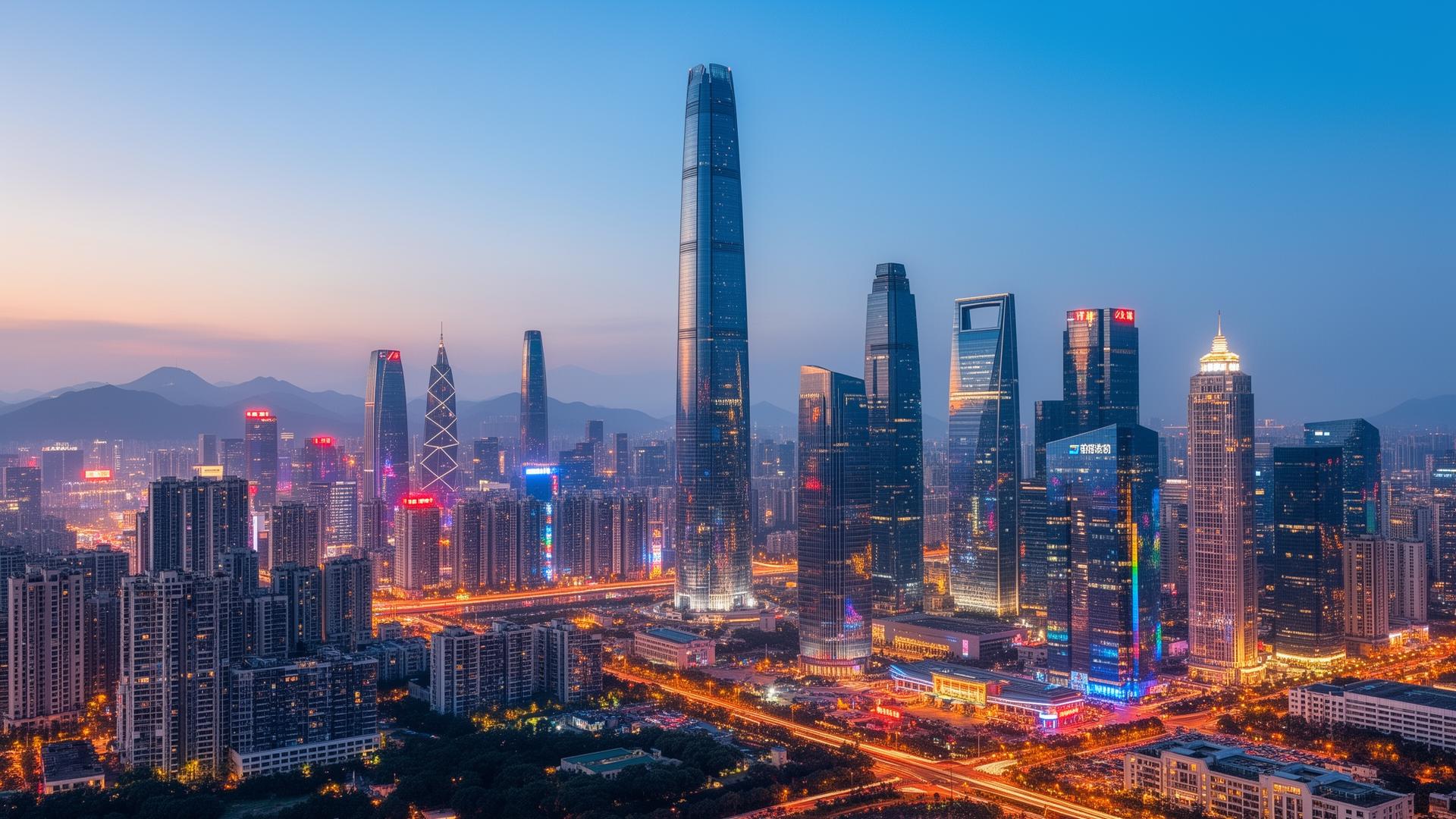
2.5 Shenzhen (深圳): The “New Money” Hub for Modern Systems & Cross-Border Care
Shenzhen’s Role in China’s Healthcare Landscape
Shenzhen is China’s fastest-evolving medical market. Unlike the century-old academic bastions of Beijing and Shanghai, Shenzhen’s strength is modern infrastructure, deep Hong Kong integration, and a commercial-first approach to service. It is the primary medical gateway for cross-border patients (Hong Kong residents, expats) and those seeking “Beijing-grade” specialty care delivered with private-hospital efficiency.
The city’s strategy is built on “National Center + Hong Kong System” hybrids. With institutions like China Medical City (Shenzhen) and Hong Kong University Shenzhen Hospital (HKU-SZH), Shenzhen offers a unique blend of mainland technical scale and international (primarily HK-style) clinical governance. For international patients, this means JCI/ACHS-level processes, robust English/Cantonese support, and the most mature international insurance billing ecosystem outside of Shanghai.
The "Big Two" Public Systems for International Patients
Shenzhen’s public healthcare for foreigners is dominated by two distinct models: the Hong Kong University system (HKU-SZH) for a Western-style experience, and the Shenzhen Municipal system (Shenzhen People’s Hospital) for high-volume complex care.
| Hospital (English/Chinese) | Key Specialty Focus | International Dept. Features | Best For... |
|---|---|---|---|
| Hong Kong University Shenzhen Hospital (HKU-SZH) 香港大学深圳医院 | Comprehensive (HK Model): Multi-Disciplinary Oncology, Cardiovascular, Ortho-Trauma, Reproductive | The Gold Standard. ACHS-accredited, full English/HK-style workflows, massive IMC (Intl. Med. Center) with direct billing. | HK residents, expats needing Western-style care, complex MDT cases, families. |
| Shenzhen People’s Hospital (SPH) 深圳市人民医院 | High-Volume Complex Care: Thoracic Surgery, Hepatobiliary, Neurology, Critical Care | The Powerhouse. New 24,000m² Intl. Dept. (2026), high-volume surgical center. | Complex mainland-style surgery, second opinions, patients valuing academic depth over hotel-style service. |
Deep Dive: Shenzhen’s National Specialty Centers
Shenzhen has aggressively imported “national team” branches to compete directly with Beijing/Shanghai in specific high-stakes domains.
| Specialty Need | Go-To Shenzhen Hospital (National Center) | Notes for International Patients |
|---|---|---|
| Oncology (Comprehensive) | China Medical University Cancer Hospital Shenzhen Hospital 中国医学科学院肿瘤医院深圳医院 (National Cancer Center Shenzhen) | Beijing-grade protocols. Direct replication of Beijing CAMS protocols, particle therapy center. |
| Cardiovascular (Heart) | Fuwai Hospital, Chinese Academy of Medical Sciences Shenzhen 中国医学科学院阜外医院深圳医院 (National Cardiovascular Center Shenzhen) | State-of-the-art. Identical equipment and surgeons as Beijing Fuwai, focused on complex interventions. |
| General Complex & Cross-Border | HKU Shenzhen Hospital (IMC) | The default for foreigners. JCI/ACHS mindset, handles everything from primary care to major surgery under one roof. |
Navigating Shenzhen’s Public International Departments
Access & Appointment Strategies
-
HKU Shenzhen Hospital (HKU-SZH): Use the “香港大学深圳医院” WeChat app -> Select “国际医疗中心 (IMC)”. This is a separate building (V-Block) with its own entrance—do not go to the main lobby. IMC has its own imaging and labs.
-
Shenzhen People’s Hospital (SPH): Book via “深圳市人民医院” app -> “国际医疗部”. The new 24,000m² facility (2026) operates like a private hospital within the public system.
Cost & Insurance
-
Fee Structure: Consultation ¥500–¥1,200 ($70 – $165); Inpatient ¥2,000–¥6,000/day. More expensive than Guangzhou but on par with Shanghai for similar service levels.
-
Insurance: BUPA, Cigna, AXA, MSH are universally accepted at HKU-SZH IMC and SPH Intl. Dept. Hong Kong-specific insurers (e.g., AXA HK, Bupa HK) have deep integration here.
When to Choose a Shenzhen Private International Hospital
While HKU-SZH feels like a private hospital, consider pure-private options like Shenzhen United Family (UFH), Chengde Clinic, or Raffles Medical for:
-
Pure Primary Care: GP visits, pediatrics, vaccinations.
-
Corporate Health: Executive check-ups for local employees.
-
Dental & Vision: Standalone specialty centers.
Bottom Line: Shenzhen Medical Strategy
-
Cross-Border Patient / HK Resident / Expat → Go directly to HKU Shenzhen Hospital IMC. This is the safest, most familiar system.
-
Complex Cancer or Heart Disease → Use the “National Team” branches (CAMS Cancer/Cardiovascular) for cutting-edge, protocol-driven care.
-
High-Risk General Surgery → Shenzhen People’s Hospital International for access to high-volume mainland academic surgeons.
-
Routine & Corporate Care → Use private international hospitals for speed and convenience.
Pro Tip: For HKU-SZH, always book through the IMC channel—it bypasses the mainland-style queueing system entirely. If you hold Hong Kong insurance, confirm if your plan has a “Shenzhen IMC” network clause for direct billing, which is often more seamless than mainland insurer processes.
Specialty care in China
Compare leading hospitals and departments by medical need across the country.